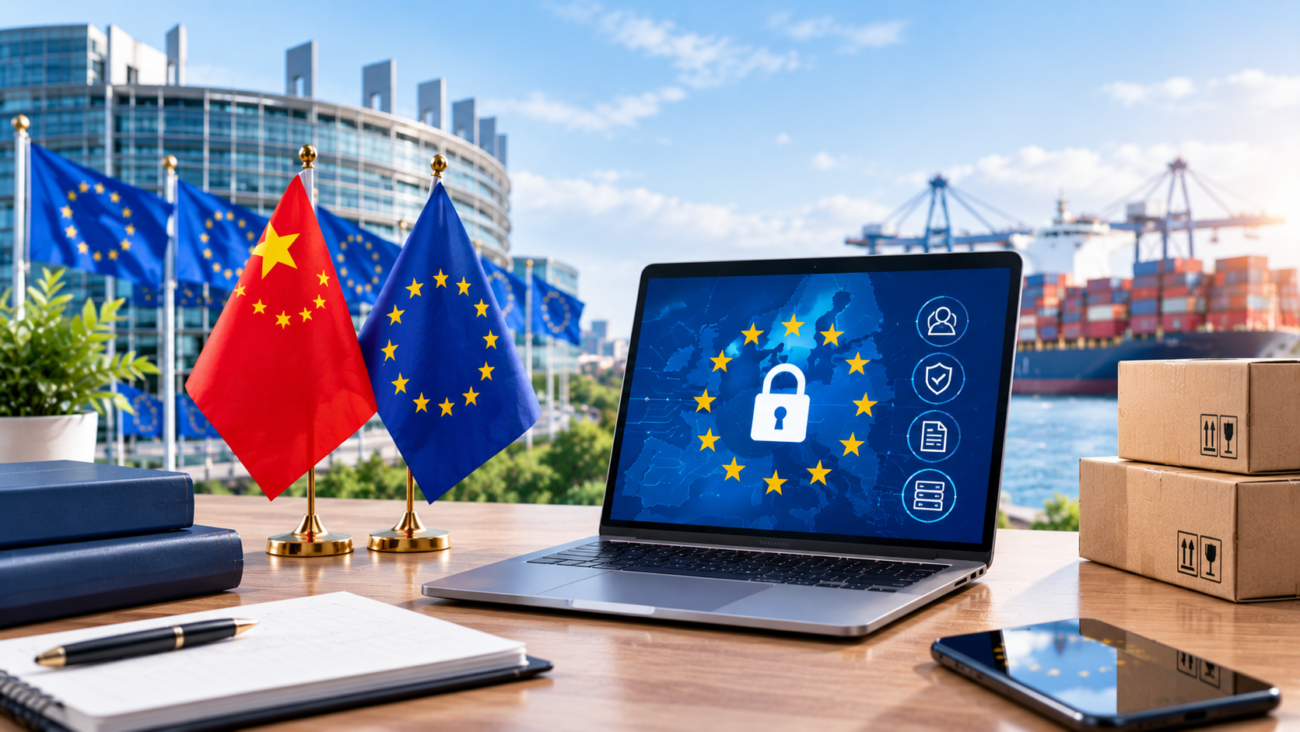




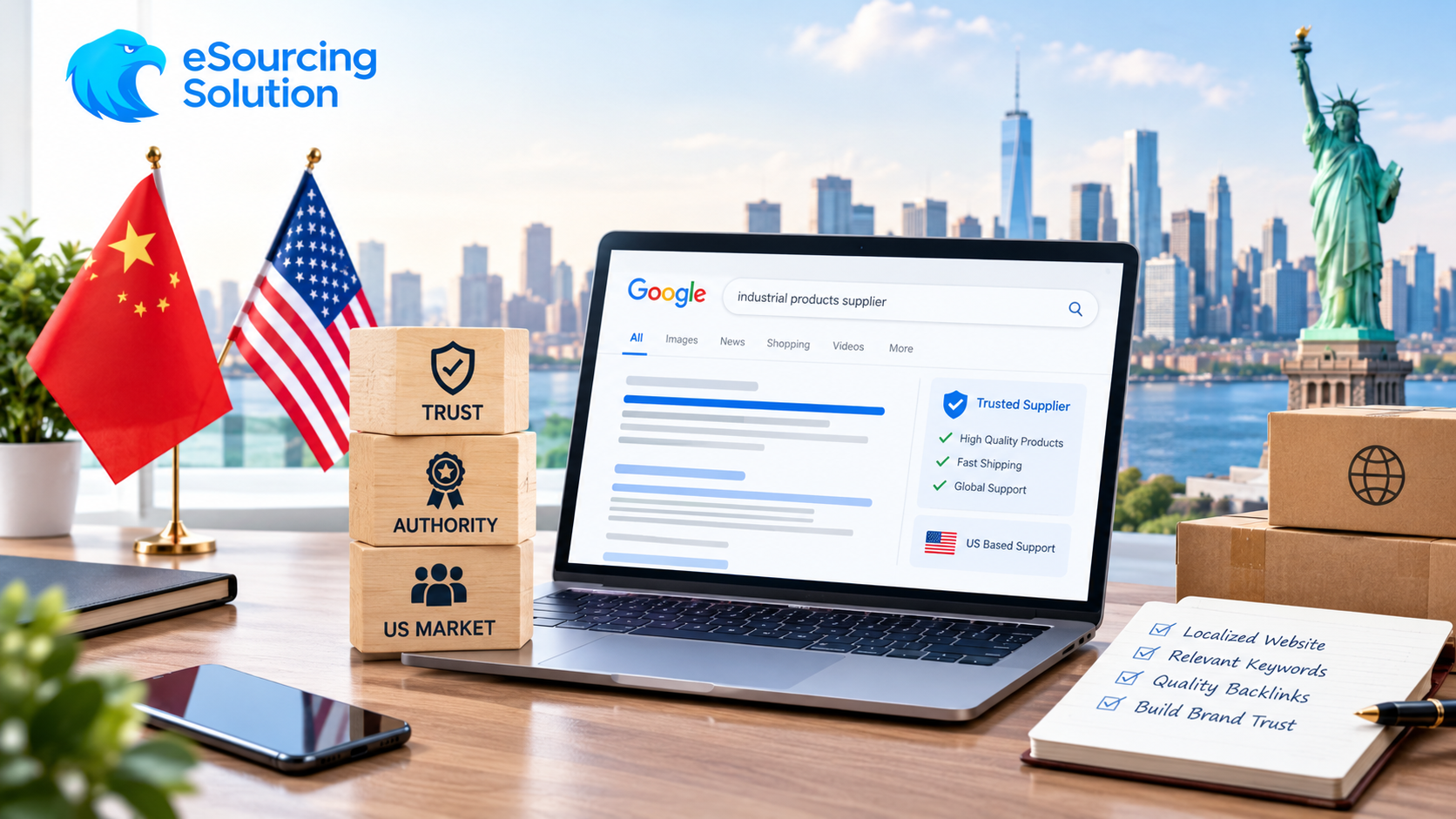
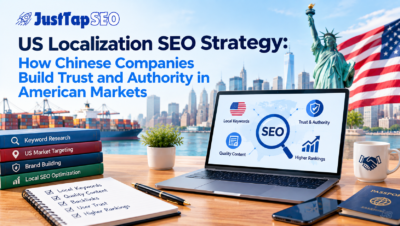
How can a Chinese company build trust and rank higher in Google when entering the American market? The answer is to go beyond translation. A successful US Localization SEO Strategy combines local search behavior, useful content, clear business information, legal compliance, and proof that customers can rely on the company.
Chinese companies have strong manufacturing capabilities, competitive pricing, and experience serving international markets. However, these advantages do not always translate into customer trust in the United States. American buyers may have questions about product quality, shipping, after-sales support, data privacy, and the company’s background before they make contact or place an order.
The numbers show why these concerns matter. A January 2026 YouGov survey found that 69% of US adults check customer reviews when verifying unfamiliar online retailers, while 65% check whether secure payment options are available. Nearly half also look for contact information.
These findings point to a simple lesson: visibility alone is not enough. When potential customers land on a website, they need clear reasons to trust the business.
For companies planning to enter the US market, 美国本地化营销, or US localization marketing, means adapting the entire online experience to American expectations. It includes keyword research, content, website design, customer service information, and local authority building.
This guide explains how Chinese companies can use SEO to improve their visibility, earn credibility, and attract American customers without losing their original brand identity.
Part 1: Cultural Localization Beyond Translation
Understand American Search Behavior
American customers do not always search for products in the same way as Chinese customers. Search terms, buying priorities, and expectations differ by industry and customer type.
For example, a Chinese manufacturer might target a keyword such as “industrial water pump supplier China.” An American procurement manager may search for “industrial water pumps for commercial buildings,” “ANSI-compliant water pump manufacturer,” or “bulk water pump supplier with US support.”
The difference is important. The first keyword focuses on the supplier’s location, while the others reflect the buyer’s needs, technical requirements, and purchasing concerns.
A Chinese company USA SEO campaign should start with research into:
- The exact phrases American buyers use when searching for products or services.
- Questions customers ask before requesting a quotation.
- Product specifications, certifications, and standards commonly mentioned in the US industry.
- Competitor pages that already rank for relevant searches.
- Commercial keywords that indicate an intention to buy, compare suppliers, or request a quote.
Use tools such as Google Keyword Planner, Google Search Console, and Google’s search results to understand these patterns. Do not assume that a direct translation of a Chinese keyword will attract the right American audience.
Read more on Google SEO for Chinese Companies.
Manage the “Made in China” Perception Through Evidence
Some American buyers may associate Chinese products with low prices, while others may have concerns about quality, supply chain reliability, intellectual property, or geopolitical risks. These views vary by industry and customer.
Trying to hide a company’s Chinese origins is not a good solution. Instead, the website should explain what makes the business reliable.
A manufacturer can publish details about its production facilities, quality control process, product testing, engineering team, export experience, and warranty arrangements. Where appropriate, it can also share independent inspection reports and verified certifications.
For example, a Chinese electronics supplier could publish a quality-control page explaining its inspection stages, testing equipment, defect-handling process, and product compliance documentation.
This provides useful information instead of relying on broad claims such as “best quality” or “world-class manufacturing.”
Build an American Brand Identity Without Hiding Chinese Roots
A brand can have Chinese origins and still offer a website designed for American customers. The key is to communicate in a way that feels relevant to the intended audience.
Consider these changes:
- Use American English spelling, including “color,” “organize,” and “customize.”
- Display prices in US dollars where appropriate.
- Explain shipping times in business days and state where orders ship from.
- Use familiar US measurements alongside metric specifications when relevant.
- Provide clear information about customer support hours and response times.
- Use product examples and case studies relevant to American industries.
A business-to-business website should also reflect how American companies make purchasing decisions. Procurement teams often need specifications, minimum order quantities, delivery terms, payment conditions, and documentation before they can approve a supplier.
Adapt Language, Visuals, and Cultural References
Direct translation can make a website sound unnatural even when the grammar is correct. American business writing usually benefits from clear, direct language and specific explanations.
For instance, instead of writing “We provide customers with the most satisfactory purchasing experience,” a company could say, “Our team helps US distributors compare product specifications, confirm order quantities, and plan delivery schedules.”
Visual choices matter, too. Red can communicate luck and prosperity in Chinese culture, but in some American contexts it may suggest danger, urgency, or a warning. Neither meaning applies in every situation, so color choices should reflect the industry and audience rather than follow a fixed rule.
The goal is not to remove the company’s cultural identity. It is to make the website easy for American visitors to understand and use.
Part 2: Legal and Compliance Content That Builds Trust
A localized website should answer basic questions about who operates the business, how customer information is handled, and what happens after a purchase.
Create the Right Legal Pages
Most businesses serving American customers should review the need for the following pages:
- Privacy Policy: Explain what personal information is collected, why it is collected, how it is used, and how customers can contact the company about privacy.
- Terms and Conditions: Set out the relevant terms governing website use, transactions, services, and other business relationships.
- Shipping and Returns: Explain shipping locations, delivery estimates, return eligibility, refund procedures, and any applicable fees.
- Warranty Policy: State the warranty period, what is covered, exclusions, and how customers can request service.
- Cookie and Data Choices: Provide the notices and controls required for the company’s circumstances and applicable laws.
Legal requirements depend on the business model, industry, location, and customers served. For example, the California Consumer Privacy Act (CCPA) provides California consumers with rights concerning personal information, including rights to know about its collection and use, request deletion in certain circumstances, and opt out of certain sales or sharing.
Not every company is subject to every provision. Businesses should seek qualified legal advice to determine which requirements apply to them.
Legal pages should also be easy to find. A visitor should not have to search through several menus to locate a return policy or privacy notice.
Make the About Us Page More Useful
An About Us page is an opportunity to explain the company’s history and establish its credibility. For a Chinese business entering the US, it should answer practical questions:
- Where is the company headquartered and where does it operate?
- How long has it been in business?
- Which products or services does it specialize in?
- What industries and markets does it serve?
- What quality standards or certifications does it hold?
- Who can American customers contact for sales or technical support?
Use verifiable facts wherever possible. Include the names and experience of key team members when relevant, along with real photographs of the team, offices, or production facilities.
Avoid claiming to have a US office, American employees, or local inventory unless these claims are accurate. If the business operates from China and serves US customers remotely, explain that arrangement clearly.
Improve Contact Information and Commercial Policies
American buyers should be able to contact the company without confusion. A dedicated contact page can include a monitored email address, a telephone number, a business inquiry form, and support hours with the relevant time zone.
A US telephone number can be useful if the company has a legitimate service arrangement for handling American inquiries. A virtual number alone, however, does not establish a physical US presence.
Similarly, a company should not publish a false American address to look more local. If it uses a distributor, warehouse, or registered US entity, it should describe that relationship accurately.
Shipping, payment, returns, and warranty terms should be available before customers commit to a purchase or contract. For B2B companies, this may mean explaining sample orders, bulk-order lead times, freight arrangements, customs responsibilities, and after-sales service.
Part 3: E-E-A-T and Authority Building for Chinese Brands
Google’s guidance on helpful content discusses experience, expertise, authoritativeness, and trustworthiness, commonly called E-E-A-T. Google Search Central explains that E-E-A-T is not itself a specific ranking factor, but its principles help describe the qualities Google aims to recognize in useful content.
For Chinese brands, the practical task is to make expertise and reliability easy to verify.
Publish Expert Content With Real Authors
An article about industrial equipment should ideally be written or reviewed by someone who understands the equipment. An article about business software should explain real use cases, limitations, integration requirements, and implementation challenges.
Author profiles can include relevant qualifications, years of experience, professional responsibilities, and links to published work. Technical articles may also identify the person who reviewed the information.
Do not invent author credentials or assign expertise to a writer who does not have it.
Earn US Media Coverage and Relevant Links
Coverage in respected American publications can introduce a brand to new buyers and provide independent evidence of its work. Depending on the industry, suitable publications may include technology media, trade magazines, manufacturing journals, and specialist business websites.
Companies can approach journalists with something genuinely useful, such as original research, a product demonstration, a technical expert, or data about an industry problem.
Paid placements should be disclosed where required, and sponsored links should follow search engine guidelines. Buying large quantities of low-quality links is not a reliable authority-building strategy.
Use Certifications and Customer Proof Correctly
Relevant certifications can help a company demonstrate that its products meet particular requirements. However, certification needs depend on the product and its intended use.
For example, some electronics may require FCC compliance, certain electrical products may be evaluated against applicable UL standards, and medical products may be subject to FDA requirements. These are different systems, not interchangeable quality badges.
A company should identify the exact product, model, certificate, listing, or authorization covered by a claim. It should never imply that every product is certified simply because one product has passed an assessment.
Customer testimonials and case studies can also support trust. With permission, include the client’s industry, the problem addressed, the solution delivered, and measurable results that can be substantiated.
The Federal Trade Commission’s guidance on reviews and testimonials is a useful reference for businesses marketing to American customers. Fake reviews, misleading endorsements, and undisclosed material relationships can damage both reputation and compliance.
Build Authority Through Relevant Business Listings
Industry associations, supplier directories, chambers of commerce, and established B2B platforms may help buyers discover a company. Choose listings that are relevant to the company’s industry and actual business operations.
Keep the company name, website, address, and telephone details consistent where those details are applicable. A directory profile should provide useful information rather than exist only to create a backlink.
Part 4: Local SEO for US Markets
Local SEO can help a business become more visible in specific American cities or regions, but it requires an honest understanding of the company’s presence.
Set Up Google Business Profile Only When Eligible
Google Business Profile is intended for eligible businesses that meet customers in person at a qualifying business location or travel to customers. Google’s business eligibility guidelines state that online-only businesses are not eligible.
A Chinese manufacturer that sells products online from China should not create a fake US location to appear in local search results. An eligible US subsidiary, showroom, or service operation may be able to establish its own profile if it meets Google’s rules.
Create State-Specific Landing Pages With a Purpose
State-specific landing pages can be useful when a company serves different regions with distinct needs. For example, a commercial equipment supplier might have a page explaining its service coverage, delivery arrangements, and industry experience in Texas.
However, simply creating 50 pages with the state name changed is unlikely to provide much value. Each page should offer meaningful local information, such as service availability, delivery details, relevant customer examples, or region-specific requirements.
Manage Reviews and Local Links
Encourage real customers to leave honest reviews on platforms relevant to the business. Respond professionally to positive and negative feedback, and use complaints to identify recurring service problems.
Google reviews, Yelp, and the Better Business Bureau have different roles and eligibility requirements. A company should not claim accreditation or a local listing it does not actually hold.
For local link building, consider regional trade associations, event organizers, distributors, business publications, and relevant industry partners. A link from a credible source connected to the company’s actual operations is more useful than a large number of unrelated directory links.
Part 5: Content Marketing for American Audiences
Content marketing gives American buyers a chance to understand the company before speaking with sales. For B2B organizations, this can be particularly important because purchasing decisions may involve several people.
Choose Topics Based on Buyer Questions
Chinese companies often publish product announcements or company news. American B2B audiences may also need practical information that helps them compare suppliers, assess risk, and justify a purchase.
Useful content topics include:
- Product comparisons and buying guides.
- Technical specifications and compatibility explanations.
- Quality control and manufacturing processes.
- Total cost of ownership and maintenance considerations.
- Shipping, import, and supply chain planning.
- Industry regulations and compliance requirements.
- Customer case studies and implementation guides.
A supplier selling packaging machinery, for example, could publish a guide explaining how to compare production speed, material compatibility, maintenance costs, and spare-parts availability. Such a page can attract relevant search traffic and support sales conversations.
Use Video and Social Proof
Video can help buyers understand products that are difficult to evaluate from photographs alone. YouTube content might include factory tours, equipment demonstrations, installation instructions, product comparisons, or interviews with technical staff.
Use descriptive titles, useful descriptions, accurate captions, and links to relevant website pages. The video should answer a real question rather than simply repeat promotional claims.
Social proof should appear where it supports the buyer’s decision. A relevant case study on a product page, for instance, may be more helpful than a general awards section that provides no details.
Combine US Localization SEO Strategy With PR and Sales
SEO content should not operate separately from the sales team. Ask sales representatives which objections they hear most often, what information buyers request, and why prospects choose another supplier.
Use these answers to plan articles, landing pages, FAQs, and downloadable resources. PR outreach can then help distribute original research, technical commentary, or useful findings to relevant American publications.
This approach makes content more practical and helps the company build authority around the topics it understands best.
Case Studies: What Three Chinese Brands Teach Us
- DJI. DJI holds an estimated 80% of the American drone market, per SlashGear. But the US Department of Defense banned and blacklisted it in 2020 over data security fears. Lesson: a great product wins share, but trust and transparency decide how long you keep it. Rules here keep changing, so check current status.
- Lenovo. Lenovo changed its name, bought IBM’s PC business in 2004, and built US-facing content with local imagery and channels. Lesson: borrow credibility from a trusted asset, then localize every touchpoint.
- Xiaomi. CNBC reported in 2018 that selling phones in the US would be hard, and the brand has moved carefully since. Lesson: you do not have to launch everything at once. Pick a category, build proof, then expand.
Conclusion
Building trust in the US is less about being loud and more about being clear. Write for American buyers, show who is behind the company, publish the pages they expect, and let real customers, media, and partners speak for you. Do that steadily and your US localization SEO strategy turns into leads.
If you want a team that knows how Chinese brands can earn trust abroad, JustTapSEO can audit your site and build a plan that fits your market and budget. Book a free consultation today.
Frequently Asked Questions
How long does a US localization SEO strategy take to work?
Plan for 4 to 6 months for steady traffic and leads, and longer for competitive terms. Reviews and media mentions build over time, so start them early.
Do I need a US address to rank on Google in the US?
No, you can rank in US organic results without one. You do need a real address and phone number for a Google Business Profile, and a local presence helps trust.
Should I hide that we are a Chinese company?
No. Be open and focus on proof: certifications, warranty, support, and customer results. Buyers forgive where you are from more easily than being misled.
Do we have to follow CCPA?
Only if you do business in California and meet one threshold: $25 million in revenue, data on 100,000 or more residents or households, or half of your revenue from selling personal data. Many smaller firms publish a clear privacy policy anyway. Check with a US attorney.
What is the fastest trust win for a Chinese brand in the US?
Fix the basics: American English, a real contact page, clear return and warranty pages, and a handful of named US customer reviews. These often do more than a link campaign