





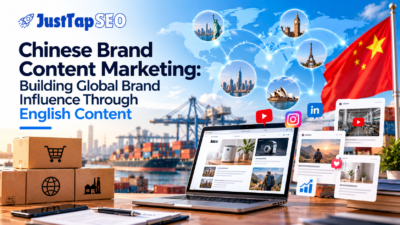
Chinese brands can build global influence by creating useful English content that fits local audiences, answers customer questions, shares real experiences, and builds trust over time. Instead of only promoting products, companies should use blogs, videos, social media, customer stories, and industry insights to show why their brand matters.
This is an important part of Chinese brand content marketing. A company may have good products and competitive prices, but overseas customers may still know very little about it. They may not understand the company’s strengths, trust its claims, or know how it is different from other brands.
Simply translating Chinese content into English is not always enough. Customers in the US and Europe may have different expectations about product information, humor, storytelling, customer service, and brand communication. Content needs to feel natural and relevant to the people reading it.
Brands such as TikTok, Huawei, DJI, and OnePlus offer useful examples of different approaches to global communication. Their experiences show how localization, educational content, expert knowledge, and customer communities can support international brand building.
This guide explains how Chinese companies can develop an English content strategy, choose the right platforms, measure results, and avoid common mistakes when entering overseas markets.
How to do Chinese Brand Content Marketing that Sells
Chinese brands should not assume that content that works in China will work in the same way in the US or Europe. The best approach depends on the audience, industry, product, and platform.
Understand How Western Audiences Consume Content
Choose content formats based on the audience
Different audiences prefer different formats. A B2B buyer looking for industrial equipment may want technical guides, comparison articles, product demonstrations, and case studies. A consumer shopping for a smartphone may prefer short videos, reviews, tutorials, and user-generated content.
| Audience or purpose | Useful content formats |
| B2B buyers | White papers, industry reports, technical blogs, case studies |
| Consumer products | Short videos, product reviews, tutorials, creator content |
| Technology audiences | Product demonstrations, expert interviews, comparison guides |
| Brand awareness | Founder stories, behind-the-scenes videos, customer stories |
| Existing customers | Email newsletters, product updates, how-to guides |
Do not choose a format only because it is popular. Choose it because it helps the intended audience understand something, solve a problem, or make a decision.
Use natural English and local references
English content should be easy to understand, especially when the audience is reading quickly on a phone or searching for a specific answer.
Avoid long sentences, unnecessary technical terms, and exaggerated claims such as “the world’s most perfect product.” Explain what the product does and why it is useful.
Humor and cultural references also need care. A joke that works in China may not make sense to an American or European reader. Brands should test creative ideas with local reviewers instead of assuming everyone will understand the same reference.
Most importantly, avoid making every post a sales message. Helpful information, honest product demonstrations, and real customer experiences often give people more reasons to pay attention to a brand.
Build the Right English Content Team
A strong content strategy needs people who understand the brand, the product, and the target market. The team does not always need to be large, but responsibilities should be clear.
Decide between translation, localization, and original English content
These three approaches serve different purposes.
- Translation: Converts existing content into English while keeping the original meaning.
- Localization: Adjusts the content for a particular market, including terminology, examples, measurements, and cultural references.
- Native content creation: Develops new content directly for the target audience, based on local search behavior, interests, and needs.
For example, a Chinese company selling kitchen equipment may translate its product specifications but create a new English article about choosing commercial kitchen equipment for restaurants in the US.
A practical approach is to combine all three. Translate accurate technical information, localize important sales pages, and create original content for brand storytelling, industry insights, and local customer questions.
Choose a suitable team structure
A smaller company may start with an in-house marketing manager, an English content writer, a designer, and a technical specialist who checks product information. A larger company may work with an overseas agency or local freelancers.
Native English writers can help with language and tone, but native fluency alone does not guarantee good marketing. Writers also need to understand the industry, customer needs, and the company’s products.
Set a clear review process. The marketing team should check the message and tone, technical staff should verify product claims, and legal staff should review content that includes regulated claims, customer data, or legal commitments.
Plan the budget around business priorities
There is no single content budget that works for every company. A startup may begin with a small number of important pages and regular social posts. An established brand may invest in research, video production, PR, SEO, and regional content teams.
Start with the content that supports the most important business goals. For example, a B2B company may prioritize technical guides and customer case studies, while a consumer brand may need product videos and creator partnerships.
Create Content That Builds Brand Value
A global brand needs more than product announcements. It should help people understand the industry, learn how to use its products, and see what makes the company different.
Thought leadership and educational content
Thought leadership means sharing useful knowledge and opinions about an industry. A company can publish market observations, expert interviews, research reports, or practical predictions.
For example, a Chinese solar equipment manufacturer could publish an article about common challenges in commercial solar installations. An electronics brand could explain how a new technology works and what customers should consider before buying it.
Educational content can include how-to guides, product tutorials, maintenance instructions, and buying guides. This content is useful because it answers questions people may already be searching for.
The key is to provide real information. If a company publishes research, it should explain where the data came from. If it makes a prediction, it should identify it as an opinion rather than a proven fact.
Brand stories and customer success stories
People also want to understand the company behind a product. A brand story can explain why the business was started, which problem it wants to solve, and how its products have developed.
Behind-the-scenes content can show the design process, factory operations, product testing, or the people responsible for customer support. These stories should use real information and images instead of generic claims.
Customer success stories are especially useful for B2B companies. A strong case study explains:
- The customer’s original problem.
- The solution selected.
- How the company implemented it.
- The result, supported by evidence where available.
- What other customers can learn from the experience.
Always get customer permission before publishing names, quotes, images, or business results. If figures cannot be shared, the case study can still explain the challenge and solution without inventing numbers.
Distribute Content Across the Right Channels
Publishing a blog or video does not guarantee that the right people will see it. Brands need a distribution plan that helps content reach their target audience.
Use owned, earned, and paid media together
Owned media includes the company website, blog, email newsletter, and official YouTube channel. These are important because the brand has greater control over the content and can direct readers to relevant product pages.
Earned media includes independent media coverage, genuine editorial mentions, guest contributions, and organic recommendations. It can help introduce the brand to new audiences, although coverage cannot be guaranteed.
Paid media includes sponsored articles, social advertising, and paid creator partnerships. It can help content reach a specific audience, but paid promotions should be identified clearly where required.
Social content should also be adapted to each platform. A detailed blog can become a LinkedIn post, a short video, an email newsletter topic, and a series of social posts. The content should be rewritten for each channel instead of copying the same text everywhere.
Email newsletters can keep existing customers and interested prospects informed about product updates, research, new guides, and company news. Content syndication can expand reach too, but brands should choose relevant publications and understand how republishing may affect search visibility.
Use SEO to Support English Content Marketing
Search engine optimization helps overseas audiences find content when they search for relevant products, problems, and industry information.
Research keywords in the target market
Chinese brands should research the words their overseas customers actually use. Direct translations from Chinese may not match the phrases used by people in the US, UK, Germany, or other markets.
For example, a company selling industrial components should research product names, applications, specifications, supplier terms, and questions buyers ask before making a purchase.
Review search results to understand the purpose behind each keyword. Some searches show that a person wants to learn, while others suggest they are comparing products or looking for a supplier.
Build topic clusters and update existing content
A topic cluster is a group of related pages that cover one main subject. For example, a company selling battery systems might publish a main guide to battery technology, supported by articles about safety, maintenance, installation, and product selection.
Link related pages together so readers can find additional information. The main guide can link to supporting articles, while those articles can link back to relevant product pages.
Content should also be updated when product specifications, regulations, industry practices, or market information change. Review older pages for outdated claims, broken links, missing information, and new customer questions.
For official guidance, refer to Google Search Central for information about creating helpful, reliable, people-first content.
Read more about B2B SEO Chinese Manufacturers: How They Acquire Overseas Buyer Inquiries
Adapt Content for Each Platform
Each platform has its own audience behavior and content style. A brand should not expect the same post to perform equally well everywhere.
| Platform | Recommended approach | Example content |
| Build professional credibility | Industry insights, expert opinions, B2B case studies | |
| YouTube | Explain and demonstrate | Product demos, tutorials, customer interviews |
| Medium | Reach readers interested in articles | Adapted educational articles and expert commentary |
| Industry publications | Reach a relevant professional audience | Guest articles, research, technical commentary |
| Reddit and forums | Join useful discussions | Answers, troubleshooting, product knowledge |
On LinkedIn, a company leader or technical expert can share practical industry knowledge instead of posting only company announcements.
YouTube is useful when a product is easier to understand through a demonstration. Videos should show real features and answer likely questions, with clear titles, descriptions, captions, and links to relevant resources.
Medium can provide another place for articles, but companies should avoid publishing duplicate copies everywhere without a clear plan. Industry publications may offer access to a relevant audience, although editorial standards and submission rules vary.
Reddit and other forums need a different approach. Brands should listen, answer questions honestly, follow community rules, and disclose their connection to a product when relevant. Repeated promotional posts can damage trust and may be removed.
Measure Content Marketing Results
A brand should decide what success looks like before publishing content. The right metrics depend on whether the goal is awareness, website traffic, lead generation, or customer retention.
A content dashboard can combine information from tools such as Google Analytics 4, Google Search Console, social platform analytics, and the company’s CRM.
However, not every result can be attributed to one article or campaign. A buyer may discover a brand through a video, read a blog later, and contact the company after seeing a LinkedIn post.
Use campaign tracking, CRM records, and customer feedback to understand these journeys. Review performance monthly and identify which topics attract the right audience, which pages lead to inquiries, and which formats deserve more investment.
Common Mistakes Chinese Brands Should Avoid
Some brands invest in English content but struggle to build a clear identity. Often, the problem is not the number of posts but the way the content is planned and reviewed.
- Publishing overly promotional content: If every article says the product is excellent, readers have little reason to return. Balance sales content with useful information and honest answers.
- Using poor translations: Awkward wording can make a professional company appear less reliable. Use qualified editors and subject experts to check important pages.
- Ignoring cultural differences: Avoid jokes, slogans, images, or examples that may confuse or offend the target audience. Ask local reviewers when the meaning is uncertain.
- Publishing without consistency: An irregular schedule makes it harder to build a recognizable brand. A realistic schedule that the team can maintain is better than publishing many posts for a few weeks and then stopping.
- Ignoring audience feedback: Comments, reviews, support requests, and sales questions can reveal what customers want to know. Respond professionally and use repeated questions to plan future content.
- Making unsupported claims: Do not publish unverified product performance, customer results, certifications, or environmental claims. Check the evidence and local legal requirements before publication.
Create a Clear Content Governance Process
When several people create English content, the brand needs shared rules. Without them, the website, social media accounts, and sales materials may use different messages or make inconsistent claims.
Start with a short brand voice guide that explains the company’s tone, target audience, preferred terminology, writing style, and words to avoid. Include examples of suitable headlines and product descriptions.
Create a simple approval process:
- The writer prepares the content based on an approved brief.
- A subject expert checks technical accuracy.
- The marketing team checks tone, SEO, and brand consistency.
- Legal or compliance staff review sensitive claims when needed.
- The responsible editor approves and schedules publication.
The company should also have a process for correcting errors, handling customer complaints, and responding to a public issue. Assign clear responsibilities so the team knows who can approve statements and when a matter needs senior review.
Case Studies: What Chinese Brands Can Learn From Global Content Strategies
The following examples show different approaches to international communication. These brands operate in different industries, and their growth cannot be explained by content alone. Their cases are useful for identifying specific lessons that other companies can adapt.
Case Study 1: ByteDance and TikTok’s Localized Content Approach
TikTok grew from a Chinese technology company into a global platform, but it was not simply a direct copy of its Chinese sister app, Douyin. Research published by Oxford Academic describes how TikTok combined familiar short-video features with localized operations for different markets. INSEAD also discusses ByteDance’s international growth and its use of recommendation technology. Read the Oxford Academic analysis and the INSEAD case study.
What other brands can learn: Global communication needs local understanding. Brands should adapt examples, creative formats, creator partnerships, and messaging to each market rather than simply translating domestic campaigns.
TikTok’s experience also shows that global growth brings challenges beyond marketing, including regulation, privacy concerns, and public trust. A strong content strategy must work alongside responsible business operations and clear communication.
Case Study 2: Huawei’s English-Language Thought Leadership
Huawei has used English-language reports, technical articles, research publications, and industry events to communicate its views on technology. For example, in 2019, Huawei released a white paper on AI security and privacy protection, presenting its views on AI governance and shared responsibility. The company’s official announcement explains the report and the event where it was presented.
This is an example of thought leadership: the company uses technical material to take part in wider industry discussions rather than relying only on product promotion.
What other brands can learn: Companies with technical expertise should turn that knowledge into useful English resources. White papers, expert interviews, research summaries, and educational articles can help communicate the company’s experience to professional audiences.
Huawei’s case should not be taken as proof that thought leadership alone creates brand trust. Its global reputation has also been shaped by commercial competition, government decisions, and security concerns. The lesson is to share credible expertise while addressing customer concerns directly.
Case Study 3: DJI and Real-World User Stories
DJI’s enterprise content hub collects stories about how organizations use drone technology in practical situations. Examples include infrastructure inspections and environmental work. The DJI Enterprise Insights user-generated content hub shows how real applications can be presented to a wider audience.
This content helps move the discussion beyond product specifications. A potential buyer can see the type of work a product supports and understand how it may be used in a real setting.
What other brands can learn: Customer stories are more convincing when they show the problem, the solution, and the actual application. A manufacturer can interview a customer, explain a production challenge, and show how its product or service helped.
For B2B brands, these stories can be especially valuable because buyers often need evidence of practical use before they contact a supplier. Always obtain permission and verify any performance claims before publication.
Case Study 4: OnePlus and Community-Driven Brand Building
OnePlus has used online communities and user participation as part of its brand approach. Its official Power of Community program invites users to contribute ideas and take part in product development. The company describes a process that includes collecting ideas, evaluating them, inviting feedback, and developing selected concepts.
This approach gives customers a role beyond simply buying products. It also creates opportunities for discussions, feedback, and content based on the experiences of real users.
What other brands can learn: A brand can build stronger relationships by listening to customers and involving them in suitable decisions. Companies can use user interviews, product feedback sessions, community discussions, and customer-submitted content to understand what people value.
Community building requires regular participation from the brand. Creating a forum or social group is not enough if the company rarely answers questions or ignores feedback.
A Practical English Content Strategy Template
Chinese companies can use the following template to plan their first three months of international content marketing.
| Planning area | Questions to answer |
| Target market | Which countries or regions are the priority? |
| Audience | Who are the customers, and what do they need? |
| Brand message | What does the company offer, and what makes it different? |
| Content goals | Is the main goal awareness, trust, SEO traffic, or leads? |
| Content formats | Which formats fit the audience and budget? |
| Distribution | Which website, social, email, or media channels will be used? |
| Team and budget | Who creates, reviews, and approves the content? |
| Measurement | Which metrics will show whether the strategy is working? |
Sample editorial calendar
This example is for a technology brand targeting English-speaking customers. It can be adjusted for other industries.
| Week | Content topic | Format | Main goal |
| Week 1 | A guide to choosing the right product | SEO blog | Attract search traffic |
| Week 2 | How the product is tested | Short video | Build trust |
| Week 3 | Expert view on an industry trend | LinkedIn article | Build authority |
| Week 4 | Customer use case or interview | Case study | Support buying decisions |
The schedule should be realistic. One useful article and one well-made video each month may be a better starting point than a daily publishing plan that the team cannot maintain.
Sample Content Performance Dashboard
Review the following metrics every month and compare them with the previous period.
| Metric | What it tells you |
| Organic clicks | Whether search traffic is growing |
| Branded searches | Whether more people are searching for the brand |
| Engaged website visits | Whether visitors are finding useful content |
| Qualified inquiries | Whether content attracts potential customers |
| Email click-through rate | Whether newsletter readers take the next step |
| Relevant media mentions | Whether the brand is gaining visibility outside its own channels |
| Content-assisted conversions | Whether content plays a role in generating leads or sales |
Set a starting baseline before judging results. Targets should reflect the company’s current performance, resources, and market rather than using arbitrary industry-wide numbers.
The Bottom Line
Chinese brand content marketing is not only about translating product information into English. It is about helping international customers understand the brand, learn from its knowledge, see its products in real situations, and feel confident about engaging with the company.
Chinese brands can make a stronger start by understanding local audiences, creating helpful English content, sharing real customer stories, and choosing platforms that fit their goals. SEO can help people discover that content, while social media, email, PR, and customer communities can help distribute it.
Start with one target market, a clear brand message, and a manageable publishing plan. Review the results regularly and use customer feedback to improve the content. Over time, this approach can help Chinese companies build stronger recognition and more lasting relationships with overseas audiences.
If your company wants to improve its international visibility and build a stronger English content strategy, book a free consultation with JustTapSEO to discuss how SEO and content marketing can support your global brand growth.
FAQs
1. What is Chinese brand content marketing?
Chinese brand content marketing is the process of using useful content to help Chinese companies reach and build relationships with international audiences. It can include English blogs, videos, social media, customer stories, newsletters, and industry reports.
2. Why do Chinese brands need English content marketing?
English content helps brands communicate with customers in international markets, explain their products, answer customer questions, and build recognition beyond China. It can also support SEO and lead generation when the content matches what the target audience is searching for.
3. Should Chinese companies translate content or create new English content?
Both approaches can work. Translation is useful for accurate product information, localization adjusts content for a specific market, and original English content addresses local customer needs and search behavior. Most brands benefit from using a combination of all three.
4. Which platforms are useful for global brand building?
The best platforms depend on the audience and industry. LinkedIn can support B2B thought leadership, YouTube is useful for demonstrations and tutorials, company blogs support SEO, and email helps maintain customer relationships. Industry publications and online communities can provide additional reach when used appropriately.
5. How can companies measure the ROI of content marketing?
Companies can track organic traffic, branded searches, audience engagement, qualified inquiries, assisted conversions, email performance, and relevant media mentions. Results should be compared with a baseline and reviewed over time because content may influence several stages of the customer journey.
6. How often should a company publish English content?
There is no fixed publishing frequency for every brand. Companies should choose a schedule they can maintain while protecting content quality. A smaller number of useful, well-researched articles and videos can be more valuable than frequent posts that provide little information.