





How can Amazon SEO Chinese sellers attract more buyers without depending entirely on Amazon ads? One practical answer is to combine Amazon SEO with Google SEO. Amazon helps sellers reach customers who are already searching for products to buy, while Google helps them reach people who are researching solutions, comparing products, and discovering brands.
For Chinese manufacturers and sellers targeting the US, UK, European, and other international markets, this dual-track strategy can create more opportunities to generate sales. Instead of depending on a single marketplace, businesses can build visibility through product listings, their own websites, useful content, and search engines.
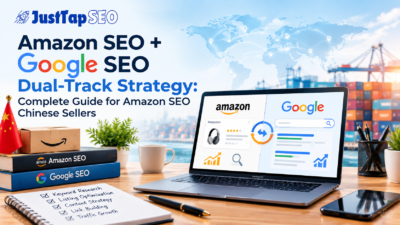
For example, a Chinese seller offering home storage products may optimise Amazon listings for terms like “foldable storage boxes.” At the same time, the seller can publish buying guides and product comparisons on its own website to attract people searching on Google.
The two channels support different stages of the buying journey. Amazon SEO helps products become easier to find within the marketplace, while Google SEO helps build visibility beyond it. When planned together, they can support better brand awareness, more diversified traffic, and long-term business growth.
Understanding the Amazon and Google Search Ecosystems
Amazon and Google both use search algorithms, but their main purposes are different. Amazon wants to help shoppers find products that match their searches and are likely to meet their needs. Google aims to provide useful results for many types of searches, including informational, commercial, and transactional queries.
Amazon SEO is often discussed using the term A9, although Amazon does not publicly disclose every detail of its current ranking systems. In practice, sellers should focus on relevant keywords, listing quality, product availability, pricing, customer experience, and sales performance.
Google SEO involves a wider range of factors, including content relevance, website quality, technical accessibility, links, and the overall usefulness of a page.
| Area | Amazon SEO | Google SEO |
| Main goal | Improve product visibility within Amazon | Attract relevant traffic from Google |
| Main content | Product titles, bullet points, images, descriptions | Product pages, guides, comparisons, category pages |
| Important signals | Relevance, sales performance, availability, customer experience | Relevance, content quality, technical SEO, links, page experience |
| Paid traffic option | Amazon Sponsored Ads | Google Ads |
| Long-term asset | Strong listings and brand presence on Amazon | Website content, brand authority, and organic visibility |
The customer journey can also connect the two channels. A shopper may first search Google for “best portable power station for camping,” read a comparison article, and then purchase a product on Amazon. Another shopper may find a product on Amazon first and later search Google for the brand to check its warranty or learn about other products.
This is why Chinese sellers should not judge every channel only by the last click. Google may introduce the brand, while Amazon completes the sale.
Paid advertising costs vary widely between industries and keywords, so there is no single reliable cost-per-click figure for every seller. Amazon PPC can provide visibility inside the marketplace, while Google Ads can reach shoppers at different stages of research. Organic SEO can reduce the need to pay for every visit over time, but it requires investment in content, optimisation, and ongoing work.
Amazon SEO Fundamentals That Help Listings Perform
Amazon listing optimisation starts with understanding what customers actually search for. A seller of wireless headphones, for example, should research terms related to the product type, features, use cases, and compatibility. The goal is not to place as many keywords as possible. It is to use the right terms in a way that makes sense to shoppers.
Product titles deserve particular attention because they explain what the product is and help customers distinguish it from other options. Amazon updated its title requirements in January 2025, including a general maximum of 200 characters for most categories and restrictions on repeated words and certain special characters. Sellers should always check the current requirements for their marketplace and category. Amazon’s title policy announcement provides more detail.
Bullet points should explain the main benefits, specifications, and practical uses of the product. Instead of repeating the same keyword, describe what makes the product useful. For a kitchen appliance, this could include capacity, cleaning requirements, dimensions, included accessories, and suitable uses.
Backend search terms can help sellers include relevant phrases that do not fit naturally in the visible listing. However, sellers should follow Amazon’s current search-term rules and avoid unnecessary repetition, misleading terms, and irrelevant keywords.
Images, reviews, pricing, and stock availability also matter to the shopping experience. Clear product images help customers understand what they are buying, while genuine customer reviews can answer questions that the listing may not cover. Sellers must never purchase fake reviews or offer incentives in exchange for positive feedback.
For eligible brands, A+ Content provides additional ways to explain product benefits through enhanced images, text, videos, and comparison charts. Amazon reports that Basic A+ Content can increase sales by up to 8% and well-implemented Premium A+ Content by up to 20%, based on its own data. These are potential improvements, not guaranteed results for every listing.
Sellers should also check the correct category and browse node. If a product is placed in an unsuitable category, customers may have difficulty finding it through relevant browsing paths.
Building Google SEO for E-commerce
Amazon is useful, but a seller’s own website gives the business more control over its content and brand presentation. Chinese sellers can build an e-commerce website using platforms such as Shopify or WooCommerce, depending on their budget, technical resources, and business needs.
The website should not simply copy the Amazon product description. It should give visitors additional information that helps them make a decision. This can include detailed specifications, comparison charts, usage instructions, warranty details, frequently asked questions, and information about the company.
Product pages should target relevant search terms without making the writing unnatural. If a seller offers industrial tools, its website may need separate pages for different product categories, applications, and specifications rather than one general page covering everything.
Structured data can also help Google understand product information. Depending on the page, Product structured data may provide details such as price, availability, shipping information, and review ratings. It does not guarantee enhanced search results, and the markup must accurately reflect visible page content. Google’s Product structured data guide explains the requirements.
Content marketing is another useful part of an Amazon Google SEO strategy. A seller can publish articles answering questions such as:
- How to choose the right product size or specification.
- What to check before buying a product.
- How two similar products compare.
- How to maintain or use a product correctly.
- Which features matter for a particular application.
These articles can attract people who are not yet ready to buy. They also create opportunities to link naturally to relevant product pages.
Video content can support this strategy as well. Product demonstrations, setup guides, and genuine comparisons can appear on YouTube and sometimes in Google search results. The content should be useful rather than promotional in every sentence.
Driving Google Traffic to Amazon Product Listings
Some Chinese sellers may prefer customers to complete their purchases on Amazon because the marketplace already has a familiar checkout process and established shopping features. Google can help bring these customers to the product listing.
One option is to publish buying guides, comparison articles, and product demonstrations that link to relevant Amazon products where the links are permitted. The content should answer the reader’s question first, rather than being written only to push a sale.
Affiliate partnerships and product reviews can also introduce products to new audiences. However, sellers should follow the relevant platform rules and disclose affiliate relationships where required. Do not publish fake reviews or present paid endorsements as independent opinions.
YouTube creators can demonstrate how a product works and explain its strengths and limitations. This is especially useful for products where buyers want to see performance before making a decision, such as electronics, tools, and home equipment.
To understand which external activities generate Amazon sales, eligible sellers can use Amazon Attribution. This tool measures the impact of non-Amazon marketing, including search, social media, video, and affiliate campaigns. Availability depends on eligibility and marketplace support.
This data can help answer practical questions. Are Google visitors purchasing the product? Do comparison articles bring more valuable traffic than general blog posts? Does a video campaign lead to product sales?
Without measurement, sellers may continue spending on content that attracts visitors but does not contribute to business goals.
Building a Brand Beyond Amazon
Amazon can be an important sales channel, but depending on one marketplace creates business risks. Changes in fees, competition, advertising costs, or marketplace policies may affect profitability.
A website gives the seller a place to explain its brand story, show its full product range, publish support information, and build relationships with customers. It can also help customers find the business when they search for the brand name.
Email marketing can support repeat purchases and product updates, provided the business collects and uses contact information in line with applicable privacy laws. A visitor who downloads a product guide should not automatically be added to every promotional mailing list without considering the relevant consent and legal requirements.
Retargeting can help businesses reach people who previously visited a website, but it must be implemented in line with applicable privacy and advertising rules. Sellers should review consent requirements before deploying advertising pixels or similar tracking technologies.
The goal is not necessarily to stop selling on Amazon. It is to create additional ways for customers to discover and recognise the brand. Over time, a seller may generate sales through Amazon, its own website, distributors, and other suitable channels.
Integrating Keyword Research, Pricing, and Inventory
The most useful dual-track strategies share data between teams. Amazon search reports can reveal the phrases customers use when looking for products, while Google Search Console can show which queries bring visitors to the company’s website.
Eligible brands can use Amazon Brand Analytics to review search terms, customer interactions, and product performance. Google Trends can help identify changes in search interest, while Google Keyword Planner provides keyword ideas and estimates for paid search campaigns.
Combining these sources can reveal useful opportunities. A product may have strong Amazon demand but limited Google content, or a website may receive informational traffic for a product category that is not well covered in Amazon listings.
Sellers should also coordinate pricing and inventory. If a product receives more traffic from a successful campaign but stock is limited, the business may waste marketing spend or disappoint customers. Inventory planning should account for demand across channels, fulfilment times, and seasonal changes.
Customer data should be handled carefully. Businesses can compare aggregated performance across channels, but they should not assume they can freely transfer personal customer information between Amazon and their own systems. Follow marketplace policies, privacy laws, and the terms of the tools being used.
Competitive Analysis and Missed Opportunities
Competitor research can show how other sellers approach Amazon and Google. Look at their listing titles, images, product descriptions, website pages, blog topics, and search visibility. The aim is to find information gaps, not copy their content.
For example, competitors may focus on broad keywords such as “desk lamp” while neglecting more specific searches related to dimming features, workspace size, or installation. These specific searches may attract fewer visitors, but they can be more relevant to a particular product.
A simple gap analysis can help organise the findings:
| What to Check | Opportunity to Look For |
| Amazon listings | Missing specifications, unclear titles, weak images |
| Google results | Useful questions competitors have not answered |
| Product comparisons | Features buyers struggle to compare |
| Brand websites | Missing product pages or support information |
| Video results | Products without useful demonstrations |
| Customer reviews | Common concerns that content could address |
Brands such as Anker show why a recognisable brand identity can matter alongside marketplace availability. However, no seller should assume that another company’s results came from SEO alone. Product quality, distribution, pricing, customer service, advertising, and other factors can all contribute.
For smaller Chinese sellers, the practical lesson is to start with a manageable product range, improve the listings and website pages, and build content around real buyer questions. This is usually more useful than trying to compete for every broad keyword from the beginning.
A 12-Month Amazon and Google SEO Roadmap
A dual-track strategy needs time and consistent work. The following is a planning example, not a guarantee of ranking or sales results.
| Period | Main Activities |
| Months 1 to 2 | Research keywords, audit Amazon listings, review competitors, and set up website analytics |
| Months 3 to 4 | Improve titles, bullet points, images, product pages, and technical SEO |
| Months 5 to 6 | Publish buying guides, comparisons, and product demonstrations |
| Months 7 to 9 | Test external traffic campaigns, use Amazon Attribution where eligible, and improve content based on results |
| Months 10 to 12 | Expand successful topics, improve conversion rates, review product profitability, and plan the next stage |
Recommended Tool Stack for Amazon SEO Chinese Sellers
- Amazon Seller Central: Manage listings, inventory, and sales.
- Amazon Brand Analytics: Review available search and customer performance data for eligible brands.
- Amazon Attribution: Measure eligible external marketing campaigns that send traffic to Amazon.
- Google Search Console: Track organic search queries, impressions, clicks, and indexing issues.
- Google Analytics 4: Understand website activity and conversions, with an appropriate privacy and consent setup.
- Google Trends: Explore changes in search interest.
- Google Keyword Planner: Research keyword ideas and paid search estimates.
- A keyword research platform: Compare keyword opportunities and competitor visibility where the budget allows.
Not every seller needs to pay for every tool. Start with the available platform reports and add paid software when it helps answer a clear business question.
ROI Calculator: Comparing Amazon and Google Traffic
To compare channels fairly, sellers should look at more than traffic volume. Consider the cost of attracting visitors, conversion rate, average order value, and contribution margin after product and fulfilment costs.
Here is a simple illustrative example using hypothetical figures:
| Metric | Amazon PPC | Google Organic |
| Monthly visits or clicks | 2,000 | 2,000 |
| Cost per visit | $0.80 | $0.30* |
| Monthly traffic cost | $1,600 | $600* |
| Conversion rate | 10% | 3% |
| Orders | 200 | 60 |
| Average order value | $25 | $25 |
| Revenue | $5,000 | $1,500 |
For Google organic traffic, the $0.30 figure is an assumed allocated SEO cost per visit, calculated from the cost of producing and maintaining content. It is not a fee charged by Google.
In this example, Amazon PPC generates more orders from the same number of visits, while the Google organic channel has a lower assumed cost per visit. But the figures alone do not show profit. Sellers still need to account for product costs, marketplace fees, fulfilment, returns, content production, and the time needed to build organic traffic.
A useful calculation is:
Contribution after marketing = Revenue × contribution margin before marketing − marketing cost
Use your own figures to compare channels, and allow enough time for SEO content to gain visibility. Paid and organic traffic have different cost patterns, so comparing them over only one short period may give a misleading result.
The Bottom Line
An effective Amazon Google SEO strategy helps Chinese sellers reach customers in more than one place. Amazon can support product discovery and purchasing, while Google can bring people to useful content, product pages, and brand information before they decide what to buy.
The best approach is to improve Amazon listings, build a useful website, publish content around real customer questions, and measure how each channel contributes to sales. Sellers should also review inventory, pricing, and customer experience so that increased traffic can turn into sustainable business growth.
You do not need to build everything at once. Start with your most important products, identify gaps in Amazon and Google visibility, and improve the areas that can make the biggest difference. With consistent work, Chinese sellers can reduce dependence on a single traffic source and build a stronger online presence.
If you want to improve your search visibility and build a practical SEO strategy for your business, Book a free consultation with JustTapSEO.
Frequently Asked Questions
- Why should Chinese sellers use both Amazon SEO and Google SEO?
Amazon SEO helps products become easier to find within the marketplace, while Google SEO can attract people researching products and brands outside Amazon. Together, they can diversify traffic sources and support different stages of the buying journey.
- Does Google SEO help Amazon product rankings directly?
Google rankings do not directly determine Amazon search rankings. However, relevant external traffic may contribute to sales, and sellers can measure the impact of eligible external campaigns through Amazon Attribution.
- How long does Google SEO take to produce results?
There is no fixed timeline. New websites may need several months or longer to build visibility, depending on competition, content quality, technical setup, and authority. Some pages may gain impressions sooner, but rankings and sales are not guaranteed.
- Should a Chinese seller build its own website if it already sells on Amazon?
For many businesses, an owned website is useful for building brand awareness, publishing detailed content, and creating another source of traffic. The right investment depends on the product, resources, margins, and long-term goals.
- Which keywords should sellers target first?
Start with relevant product keywords and specific searches that reflect buyer needs. Use Amazon search data, Google Search Console, keyword research tools, and customer questions to identify terms with a clear connection to the products you sell.